Unitree G1
Compact humanoid platform in the 35 kg class, with 23 to 43 DOF depending on configuration, dexterous-hand option, depth camera, and 3D LiDAR.
Official sourceSchmidtFactories helps industrial teams evaluate humanoid and mobile robots for realistic factory tasks: line-side handling, kitting, inspection, sorting, teleoperation-assisted support, and data capture in brownfield production environments.

Evaluation first. Integration second. No reseller claims.
The early value is not replacing a full production line. It is testing flexible, bounded tasks where human-designed environments make traditional fixed automation expensive or slow to justify.
Part presentation, bin sorting, fixture loading, and line-side material preparation in supervised cells.
Controlled loading and unloading around benches, test rigs, and small assemblies before wider automation.
Mobile visual checks, photo documentation, thermal or acoustic observations, and line-side condition capture.
Human-in-the-loop control for uncertain tasks, remote expert support, and gradual autonomy validation.
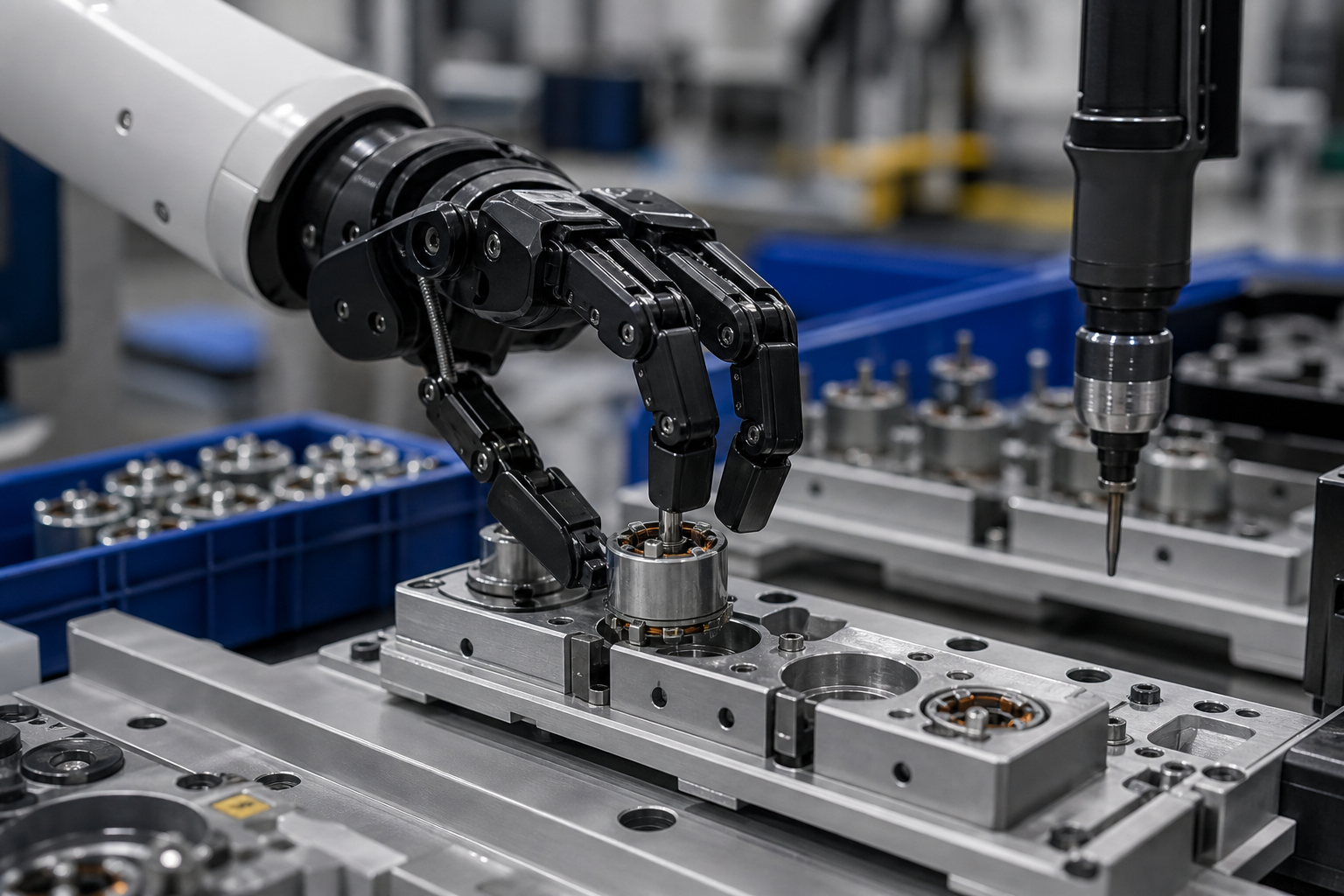
These platforms are treated as candidate systems to evaluate against task fit, safety, supportability, procurement path, and integration risk. SchmidtFactories does not claim official reseller or partner status.
Compact humanoid platform in the 35 kg class, with 23 to 43 DOF depending on configuration, dexterous-hand option, depth camera, and 3D LiDAR.
Official sourceQuadruped inspection and patrol candidate in the 15 kg class, with 4D LiDAR, 1 to 4 hour battery ranges, and 7 to 12 kg payload ranges depending on model.
Official sourceFull-size humanoid candidate: 169 cm, about 69 kg, 40 DOF, 3D LiDAR, RGB-D, RGB and fisheye perception, with hot-swappable or fast-charge battery support.
Official sourceIndustrial wheeled humanoid positioned for force-controlled work, IP42 full-machine protection, and sub-millimeter assembly positioning per AGIBOT marketing.
Official sourceCheck routes, tasks, surfaces, lighting, connectivity, and existing safety zones.
Define operating boundaries, fallback modes, supervision, and manual stop concepts.
Pick one narrow task with measurable cycle, quality, and intervention criteria.
Run a controlled trial and decide whether to integrate, defer, or redesign the use case.
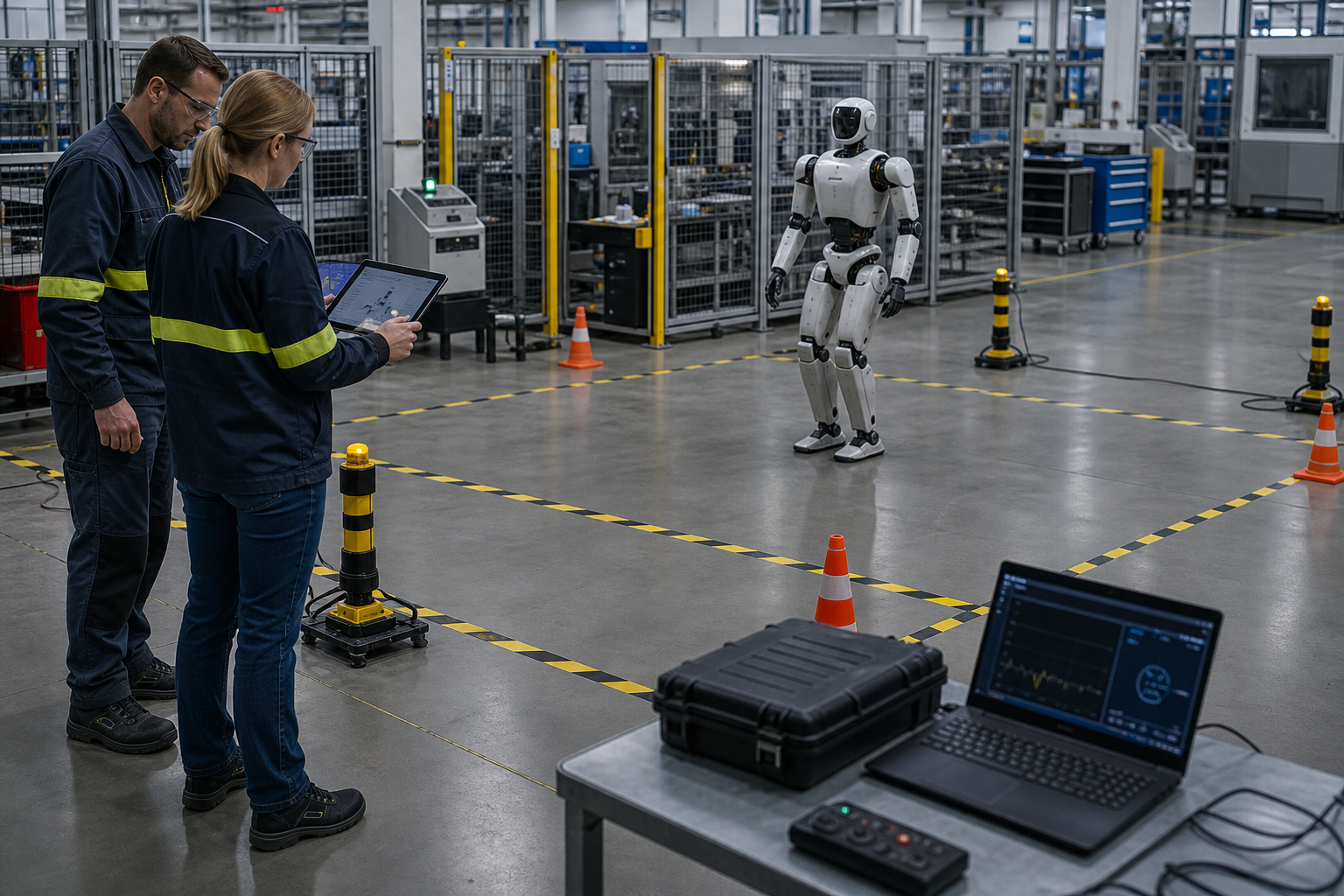
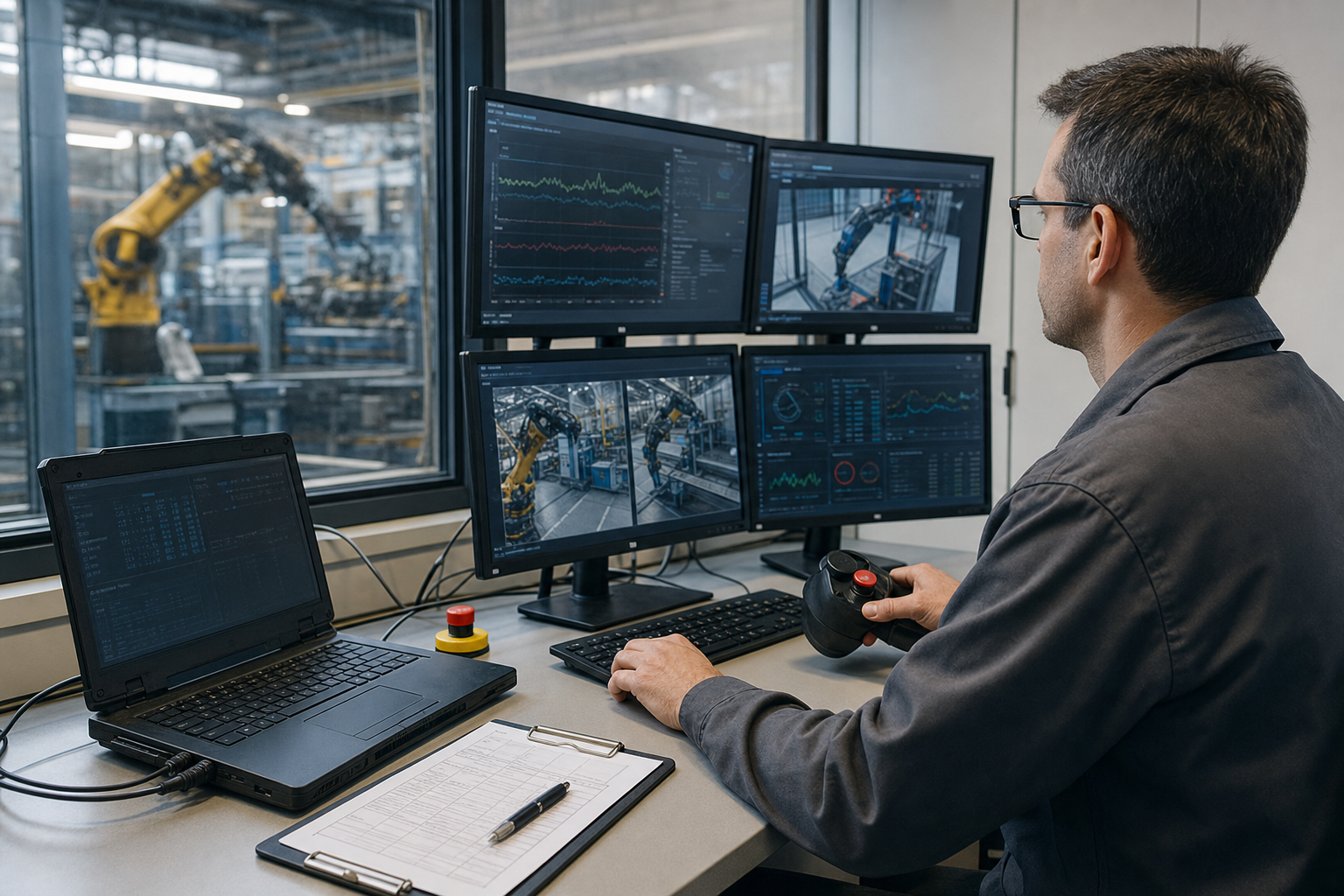
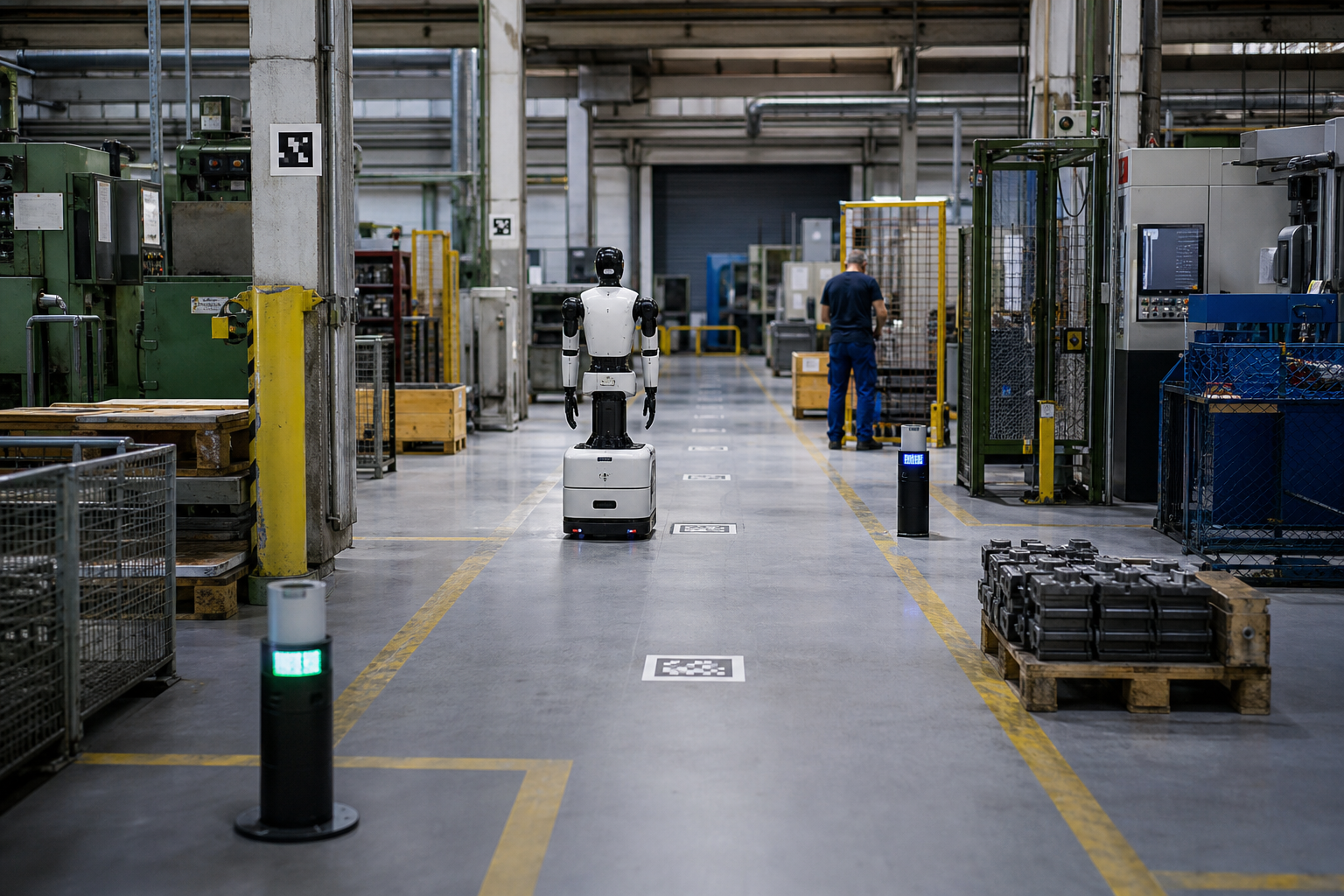
Bring one production task. We will map feasibility, platform fit, safety requirements, and the practical next step.